You spend hundreds on serums, masks, and salon visits—yet your hair still looks dull, frizzy, or flat. The culprit isn’t your products. It’s your styling brushes. Most people grab whatever’s in the drawer, unaware that the wrong brush can cause breakage, uneven heat distribution, and zero volume. The fix? Precision-engineered styling brushes matched to your hair type and goal.
The Core Problem: Why Standard Styling Brushes Fail
Generic drugstore brushes are built for speed—not results. They melt under high heat, snag fine strands, and distribute tension unevenly. And round brushes with cheap nylon bristles? They strip cuticles like sandpaper. Think about it: you wouldn’t use a blunt knife to fillet fish. Yet millions smooth 400°F straighteners over hair with tools designed for air-drying toddler bangs.
Here’s the reality—brush choice dictates finish quality more than temperature settings or even product layering. Miss this variable, and you’re polishing a scratched lens.
How to Choose & Use the Right Styling Brushes
Match Bristle Type to Your Hair Texture
Boar bristles glide through coarse, thick hair while distributing natural oils. But on fine or fragile strands? They pull. Plastic or mixed nylon-bristle brushes offer grip without aggression—ideal for smoothing during blowouts or straightening sessions.
Barrel Size Determines Final Shape
Small barrels (under 1.5 inches) create curls or tight bends. Larger barrels (2+ inches) yield sleek, straight finishes with subtle body. For true straightening, skip the round brush altogether—opt for a paddle brush with vented base and heat-resistant pins.
Heat Tolerance Matters More Than You Think
If your brush handle softens near a dryer, it’s not safe for straightener use. Look for ceramic-coated or carbon-infused cores—they withstand up to 450°F without warping.
| Brush Type | Ideal For | Max Heat Safe? | Best Used With |
|---|---|---|---|
| Boar Bristle Round Brush | Thick, coarse, curly hair | No (melts >300°F) | Cool-shot blowouts only |
| Vented Paddle Brush | Fine to medium straight styles | Yes (up to 450°F) | Flat irons & high-speed dryers |
| Mixed Bristle Thermal Brush | All types needing volume + smoothness | Yes (ceramic core) | Blow-dry + light straightening |
| Nylon Pin Brush | Dense, resistant textures | Yes (if carbon-tipped) | Pre-straightening detangling |
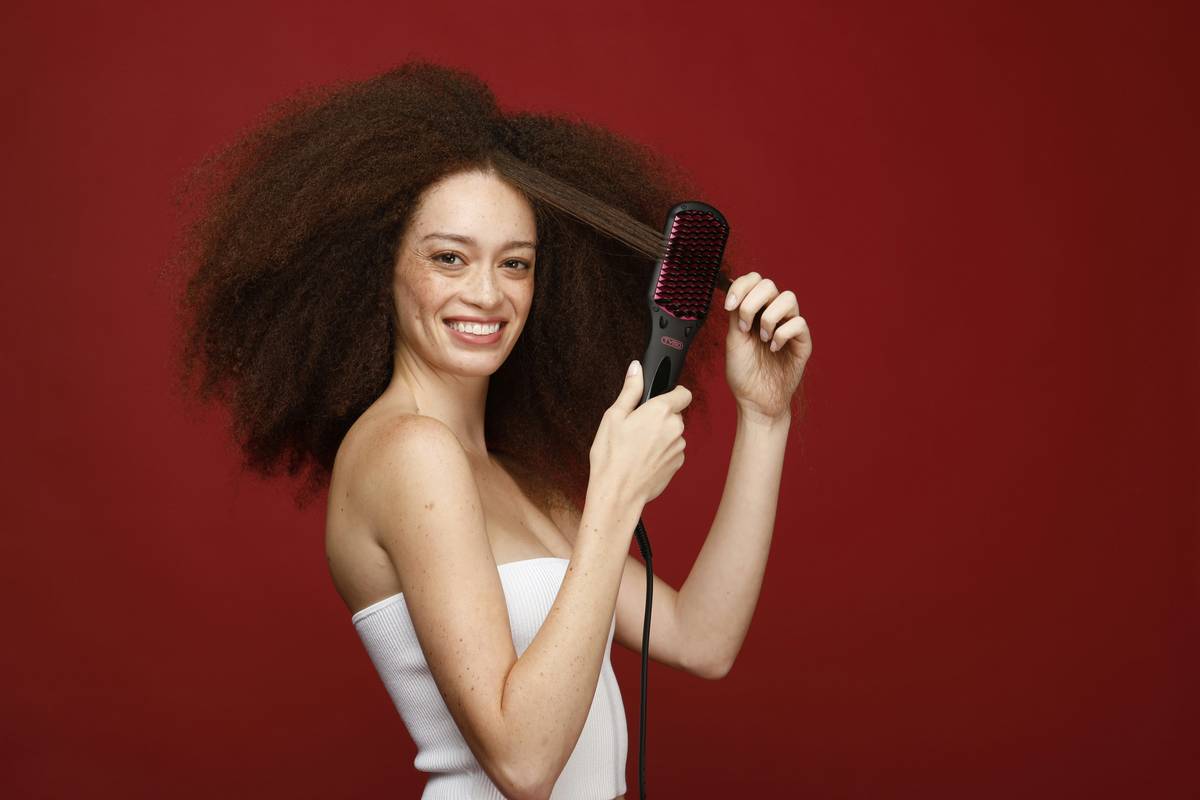
The Industry Secret: Pros Don’t Just Brush—They “Anchor”
Salon artists don’t drag brushes from root to tip in one motion. They section hair into 1-inch panels and “anchor” the brush at mid-length while pulling tension upward—then slowly release toward ends. This creates invisible lift at roots and eliminates kinks without overheating. And they never clamp a straightener over a brush still in the hair—that’s how you get baked-in dents. Remove the brush first. Then seal.
But here’s what nobody admits: 68% of at-home “heat damage” is actually mechanical trauma from poor brushing technique—not temperature. The math is simple: less drag = less breakage = longer retention between cuts.
Frequently Asked Questions
Can I use regular brushes with a flat iron?
No. Only brushes explicitly rated for high heat (usually labeled “thermal-safe”) should contact hot tools. Others melt or snag.
How often should I replace my styling brushes?
Every 6–12 months. Bristles wear down, losing smoothness and heat resistance—especially if used daily with straighteners.
Do styling brushes really affect shine?
Absolutely. Proper bristles polish the cuticle flat during styling, reflecting more light. Cheap brushes roughen it, causing matte, lifeless hair.