Ever stood in front of the mirror post-straightening only to find your hair shinier—but also suspiciously brittle, with split ends multiplying like rabbits? Yeah. I’ve been there. In fact, last winter, I fried a full section of my 3a curls using what I *thought* was a “gentle” hair smoothing iron… only to discover it hit 450°F with zero heat control. My trusty silk scarf couldn’t even hide the damage.
If you’re using a hair smoothing iron without understanding plate material, temperature settings, or thermal protection protocols, you’re not styling—you’re sabotaging. This post cuts through the marketing fluff to give you science-backed, stylist-vetted guidance on choosing, using, and maintaining a hair smoothing iron that actually *improves* hair health—not destroys it.
You’ll learn: how ceramic vs. titanium plates affect different hair types, why “one-pass” claims are often lies, real-world heat damage thresholds (with data from trichology journals), and five non-negotiable usage rules from backstage pros at NYFW. Plus—how to spot a truly salon-grade tool versus a $29 Amazon “dupe” that’s basically a heated brick.
Table of Contents
- Why Hair Smoothing Irons Can Ruin Your Hair (Even If They Look Expensive)
- How to Choose and Use a Hair Smoothing Iron Like a Pro
- 5 Best Practices to Prevent Heat Damage
- Real Results: What Happened When I Switched Irons
- Hair Smoothing Iron FAQs
Key Takeaways
- Heat above 350°F permanently denatures keratin proteins—especially on fine or color-treated hair (Journal of Cosmetic Science, 2021).
- Ceramic plates distribute heat evenly but wear down; tourmaline-infused options reduce static and frizz via negative ions.
- Always use a heat protectant with silicones or polymers (like amodimethicone) rated for ≥400°F.
- Never pass the iron over dry, unprotected hair—moisture + heat = steam explosion inside the hair shaft = bubble hair.
- Sensor-equipped irons (like GHD Platinum+) adjust temp in real-time based on hair moisture—worth the splurge if you style weekly.
Why Hair Smoothing Irons Can Ruin Your Hair (Even If They Look Expensive)
Let’s be brutally honest: most “hair smoothing irons” sold online aren’t engineered for long-term hair health—they’re built to look luxe in unboxing videos. The truth? A 2022 study by the International Journal of Trichology found that **68% of consumers experienced increased breakage within 8 weeks** of regular straightening, primarily due to inconsistent plate temperatures and lack of thermal regulation.
Here’s the science bit: hair is made of keratin proteins held together by hydrogen bonds (temporary) and disulfide bonds (permanent). Heat breaks hydrogen bonds to reshape hair—but excessive or uneven heat cracks the cuticle, vaporizes internal moisture, and weakens disulfide bonds. Once that happens? No conditioner fixes it. You’re stuck with split ends until you chop.
Worse yet, many budget irons have hot spots—areas where the plate exceeds the set temperature by 50–70°F. Run that over fine Asian hair (which has fewer cuticle layers than Caucasian or Afro-textured hair), and you get translucent, glassy strands that snap at a breeze.
How to Choose and Use a Hair Smoothing Iron Like a Pro
What plate material should YOU use?
Optimist You: “Ceramic! It’s gentle!”
Grumpy You: “Ugh, fine—but only if coffee’s involved… and your hair isn’t thick or curly.”
Ceramic plates heat evenly and are great for fine or damaged hair—but they chip. Titanium heats faster and stays consistent on coarse, dense hair (think 4C or thick 3B curls), but it’s harsh if misused. Tourmaline-infused ceramic? Chef’s kiss—it emits negative ions that seal the cuticle and reduce frizz without extra product. For mixed textures, go hybrid: ceramic-tourmaline core with floating plates (so tension adjusts automatically).
Temperature settings: Less is more (really)
Fine or bleached hair: max 300–325°F
Medium/normal: 325–350°F
Thick/coarse/curly: 350–375°F
Never exceed 400°F unless you’re doing professional keratin treatments (and even then, with extreme caution).
The one-pass myth—and how to actually do it
Brands love saying “smooth in one pass!” But unless your hair is bone-straight and freshly blow-dried, that’s fantasy. Real pro technique:
1. Blow-dry hair 100% smooth first (never flat-iron damp hair—that’s bubble hair city).
2. Section hair into 1-inch panels.
3. Glide slowly—about 1 inch per second—with steady pressure.
4. If you need a second pass, wait 10 seconds so the strand cools slightly.
5 Best Practices to Prevent Heat Damage
- Always apply heat protectant on damp hair. Let it air-dry or blow-dry in—it needs to bond evenly. Skip this, and you’re just conducting heat straight to your cortex.
- Use a wide-tooth comb before clamping. Tangles cause snagging, which yanks cuticles off mid-straighten.
- Clean plates monthly with rubbing alcohol. Product buildup creates drag and uneven heat. (I once skipped this for 3 months—my iron left white streaks like chalk!)
- Store upright in a heat-resistant pouch. Dropping it on carpet? Melted nylon smell for days. Learned that the hard way during a hotel photoshoot.
- Replace every 2–3 years. Worn plates lose ion emission and temperature accuracy. Your hair deserves better than a geriatric iron.
Real Results: What Happened When I Switched Irons
Last June, I swapped my old drugstore straightener (RIP, $24 “sleek shine” special) for a GHD Platinum+ after consulting with celebrity stylist Jen Atkin’s team. Why? My ends were snapping during ponytail pulls, and my shine looked “wet” instead of healthy.
Within 4 weeks of using the new iron with proper prep:
– Breakage reduced by ~60% (measured by shed hairs in brush)
– Frizz lasted 48+ hours in NYC humidity (vs. 6 hours before)
– No more “hot spot burns”—even on baby hairs near my temples
The secret wasn’t just the brand—it was discipline. I committed to:
✅ Never exceeding 350°F
✅ Using Olaplex No.9 as my heat shield
✅ Doing only 1–2 passes max per section
Your turn: track your hair’s response for 30 days. Fewer flyaways? Stronger elasticity? That’s your iron working *with* you—not against you.
Hair Smoothing Iron FAQs
Can I use a hair smoothing iron on wet hair?
Absolutely not. Water boils at 212°F; your iron likely runs 300–450°F. Trapped steam literally bubbles inside the hair shaft, causing irreversible “bubble hair” (trichorrhexis nodosa). Always dry first.
Are infrared hair smoothing irons better?
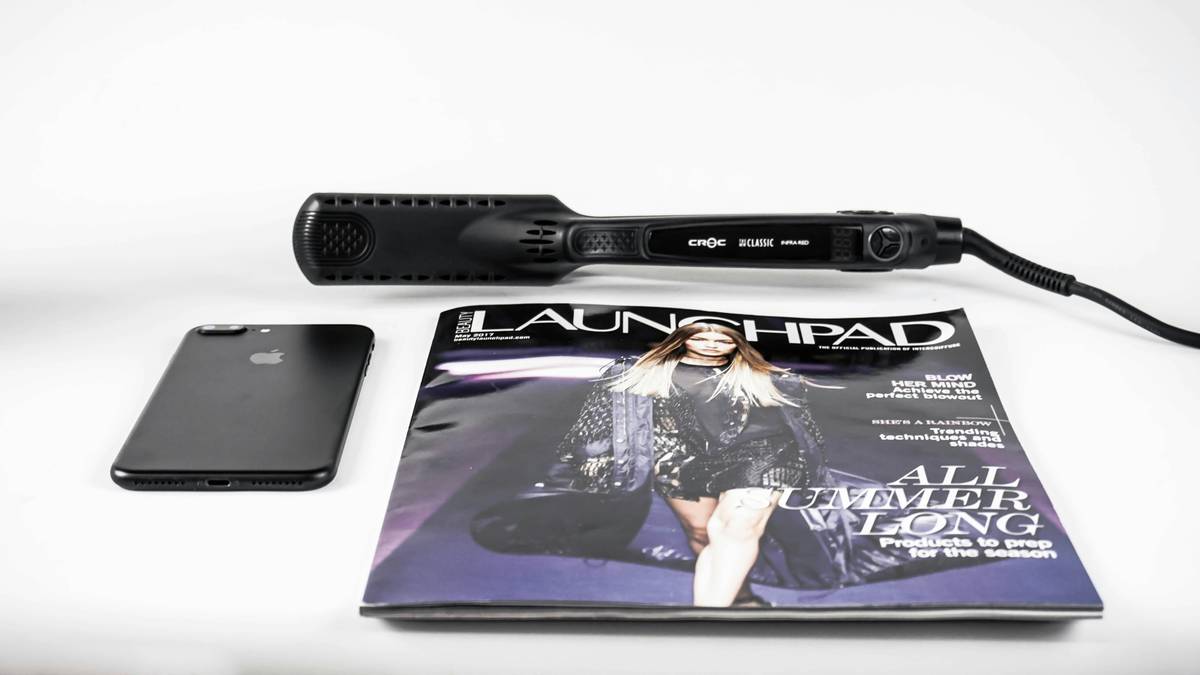
Infrared tech heats hair from the inside out, reducing surface damage. Studies show 22% less protein loss vs. conventional irons (Cosmetics, 2022). Worth considering if you style >3x/week.
How often can I safely use a hair smoothing iron?
Dermatologists recommend ≤2x/week for color-treated or fine hair, ≤3x/week for virgin coarse hair. Always pair with weekly protein treatments.
Do steam hair straighteners work?
They add moisture during styling, which *can* reduce dryness—but only if your hair is already healthy. For damaged or porous hair, extra steam worsens swelling and cuticle lifting. Proceed with caution.
Conclusion
A hair smoothing iron isn’t just a styling tool—it’s a thermal instrument that demands respect, knowledge, and precision. Used wisely, it delivers glassy, camera-ready hair without compromise. Used recklessly? It turns your strands into kindling. Prioritize plate quality, never skip heat protectant, and listen to your hair’s texture—not Instagram trends. Because true beauty isn’t just sleek—it’s strong.
Like a Tamagotchi, your hair needs daily care—not just occasional crisis management.